



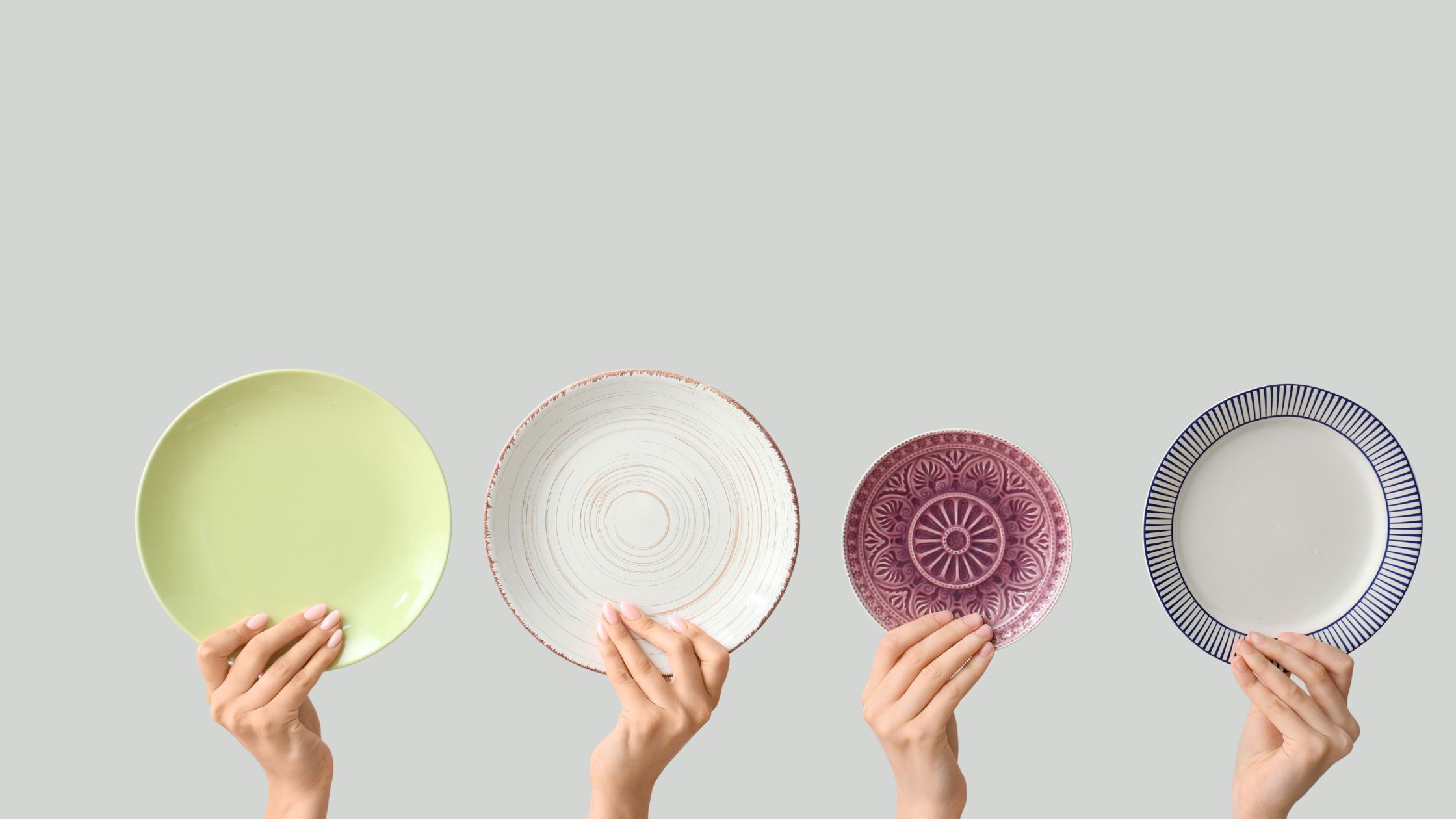
Paper plates vs plastic plates in 2026: paper plates win on environmental impact — they are biodegradable, increasingly PFAS-free, and compostable in bagasse form. Plastic plates win on raw durability and moisture resistance for heavy outdoor use. However, with heavy-duty paper plates now reaching 350+ GSM with aqueous coatings that rival plastic performance, the practical gap has narrowed significantly. For most events, premium paper plates or bagasse alternatives are now the smarter, more future-proof choice. Plastic plates remain viable for specific high-load outdoor applications where structural rigidity is non-negotiable.
Table of contents
- A Debate That Has Genuinely Shifted in 2026
- Paper Plates vs Plastic Plates: 2026 At-a-Glance Comparison
- Environmental Impact in 2026: The Gap Has Widened
- Performance Comparison: How Paper Plates Now Stack Up Against Plastic
- Health & Safety Considerations: What’s Changed in 2026
- Cost Comparison: The True Price of Paper vs Plastic in 2026
- The Regulatory Landscape in 2026: Why This Matters for Buyers and Retailers
- Consumer Preferences and Market Trends in 2026
- How to Choose Between Paper and Plastic Plates in 2026: A Practical Guide
- Source the Right Plate for 2026 with Party Sparkz
- Conclusion: Paper Plates Win in 2026 With the Right Spec
- Frequently Asked Questions
A Debate That Has Genuinely Shifted in 2026
The paper plates vs plastic plates debate has been a fixture of disposable tableware discussions for decades. For most of that time, the answer depended almost entirely on where you stood on the cost-versus-sustainability spectrum: plastic was cheaper and sturdier; paper was greener but weaker.
In 2026, that framing is outdated. The materials science behind paper plates has advanced substantially. Heavy-duty paper plates now hit 350+ GSM with aqueous and PLA coatings that rival the moisture resistance of many plastic alternatives. Bagasse (sugarcane fibre) plates have gone mainstream, offering natural grease resistance, full home compostability, and zero chemical coatings. Meanwhile, single-use plastic plates face increasing regulatory headwinds in the EU, UK, and multiple US states, with bans, levies, and mandatory eco-labelling reshaping the retail landscape.
At the same time, consumer behaviour data from 2025–2026 shows that sustainability is no longer a niche purchasing driver — it is a mainstream consideration across age groups, income levels, and geographies. Shoppers are actively choosing away from plastic disposables, and retailers are adjusting their assortments accordingly.
This guide gives you an honest, up-to-date comparison of Paper Plates vs Plastic Plates across every dimension that matters in 2026: environmental impact, performance, cost, health considerations, regulatory context, and the innovations reshaping both categories. We’ll also show you how Party Sparkz’s product range reflects the direction the market is heading.
Paper Plates vs Plastic Plates: 2026 At-a-Glance Comparison
| Factor | Paper Plates | Plastic Plates |
| Environmental Impact | ✅ Biodegradable; bagasse fully home-compostable | ❌ Non-biodegradable; persists 400–1,000 years in landfill |
| Durability | ⚠️ 280–350 GSM matches most plastic for typical use | ✅ Superior for heavy outdoor / extreme-load use |
| Moisture Resistance | ✅ Biodegradable; bagasse is fully home-compostable | ✅ Excellent — inherent material property |
| Microwave Safety | ✅ Aqueous-coated plates are microwave-safe | ❌ Most disposable plastic plates cannot be microwaved |
| Regulatory Risk (2026) | ✅ Low — widely supported by regulation | ❌ High — bans/levies expanding across EU & US states |
| PFAS / Chemical Risk | ✅ PFAS-free options widely available (bagasse, aqueous) | ⚠️ BPA-free options exist but chemical leaching risk remains |
| Cost Per Unit | ⚠️ Slightly higher; premium & eco add cost | ✅ Lower upfront cost per unit at volume |
| Consumer Perception (2026) | ✅ Strongly preferred by majority of consumers | ❌ Declining — seen as environmentally irresponsible |
| Print & Design Quality | ✅ Excellent with clay coating; vivid, detailed prints | ⚠️ Good but less vibrant on matte plastic surfaces |
2026 Summary Paper Plates vs Plastic Plates: For the vast majority of real-world use cases, parties, events, catering, retail, and premium paper plates now match or exceed plastic plates on performance while decisively winning on environmental and regulatory grounds.
Environmental Impact in 2026: The Gap Has Widened
Environmental impact has always been the strongest argument for paper over plastic. In 2026, that argument is stronger than it has ever been not just because of what we know about plastic, but because of how much paper plate technology has improved.
The Problem with Plastic Plates in 2026
Disposable plastic plates are made primarily from polystyrene (PS) or polypropylene (PP), petroleum-derived materials that do not biodegrade. In a landfill, a plastic plate will persist for an estimated 400 to 1,000 years, slowly fragmenting into microplastics that enter soil and water systems. Microplastic contamination is now detectable in human blood, breast milk, and major food chains, a fact that has shifted public and regulatory attitudes sharply against single-use plastics.
Recycling offers a partial solution, but only a partial one. Most curbside recycling programmes do not accept food-contaminated plastic plates. Those that do require thorough washing largely negate the convenience argument. Effective recycling rates for single-use plastic tableware remain below 10% in most markets.
The production footprint is also significant: plastic plate manufacturing relies on fossil fuel extraction, petrochemical refining, and energy-intensive moulding processes, contributing to greenhouse gas emissions before the product even reaches a shelf.
2026 Regulatory Update: The EU Single-Use Plastics Directive is now fully enforced across member states. Several US states, including California, New York, and Maryland, have enacted or are implementing single-use plastic tableware restrictions. Retailers sourcing plastic plates for markets in these regions should audit their assortment now.
Also read – Best Gift Paper Bags for Retailers
The Environmental Case for Paper Plates in 2026
Modern paper plates have addressed many of the historical criticisms levelled at the category. The core advantages remain: paper is biodegradable, breaking down within weeks to months under composting conditions compared to centuries for plastic. But the 2026 paper plate market has added significant nuance to this advantage.
- Bagasse (Sugarcane Fibre) Plates: The fastest-growing segment in eco-friendly tableware. Made from agricultural waste that would otherwise be incinerated, bagasse plates require no virgin tree pulp, no chemical coating, and are fully home-compostable. PFAS-free by default. In 2026, bagasse had moved from niche health food stores to mainstream grocery and party supply retail.
- PFAS-Free Paper Plates: Following US FDA action in 2024, phasing out PFAS use in food packaging, major retailers and manufacturers have accelerated the transition to PFAS-free coatings. By 2026, PFAS-free paper plates will represent the majority of new product introductions in the category.
- Recycled Content Paper Plates: A growing range of paper plates now incorporates post-consumer recycled fibre content, reducing virgin pulp demand and closing the loop on paper waste streams.
- Aqueous-Coated Plates: Water-based coatings allow paper plates to enter standard paper recycling streams, something PE-coated plates and all plastic plates cannot do. This gives aqueous-coated paper plates a genuine end-of-life advantage.
PartySparkz’s eco range of wholesale paper plate sets, including PFAS-free bagasse plates and aqueous-coated paper plates, is aligned with 2026’s regulatory and consumer demands. All eco products are clearly labelled with certification status (BPI, PFAS-free) for retail transparency.
Also read how to find the best paper plates for Retailers
Performance Comparison: How Paper Plates Now Stack Up Against Plastic
The performance argument for plastic plates was always primarily about durability, specifically, resistance to moisture, grease, and structural collapse. In 2026, the performance gap between premium paper and plastic has narrowed to the point where, for most everyday applications, it is no longer meaningful.
Where Plastic Plates Still Have a Genuine Edge
- Extreme Outdoor Conditions: In high-humidity environments, outdoor events in tropical or coastal climates, poolside parties, rain-risk events — plastic plates maintain their structural integrity in ways even high-GSM paper plates cannot fully replicate over extended exposure.
- Very Heavy Loads Over Extended Time: If guests will be holding plates for 30+ minutes with a full serving of stew, curry, or braised meat, a rigid plastic plate provides a level of sustained structural confidence that requires 350+ GSM paper to match.
- Reuse Applications: Heavier-gauge plastic plates (not all plastic plates are single-use) can be washed and reused multiple times, which changes the sustainability calculus entirely if reuse is genuinely happening.
Where Premium Paper Now Matches or Beats Plastic
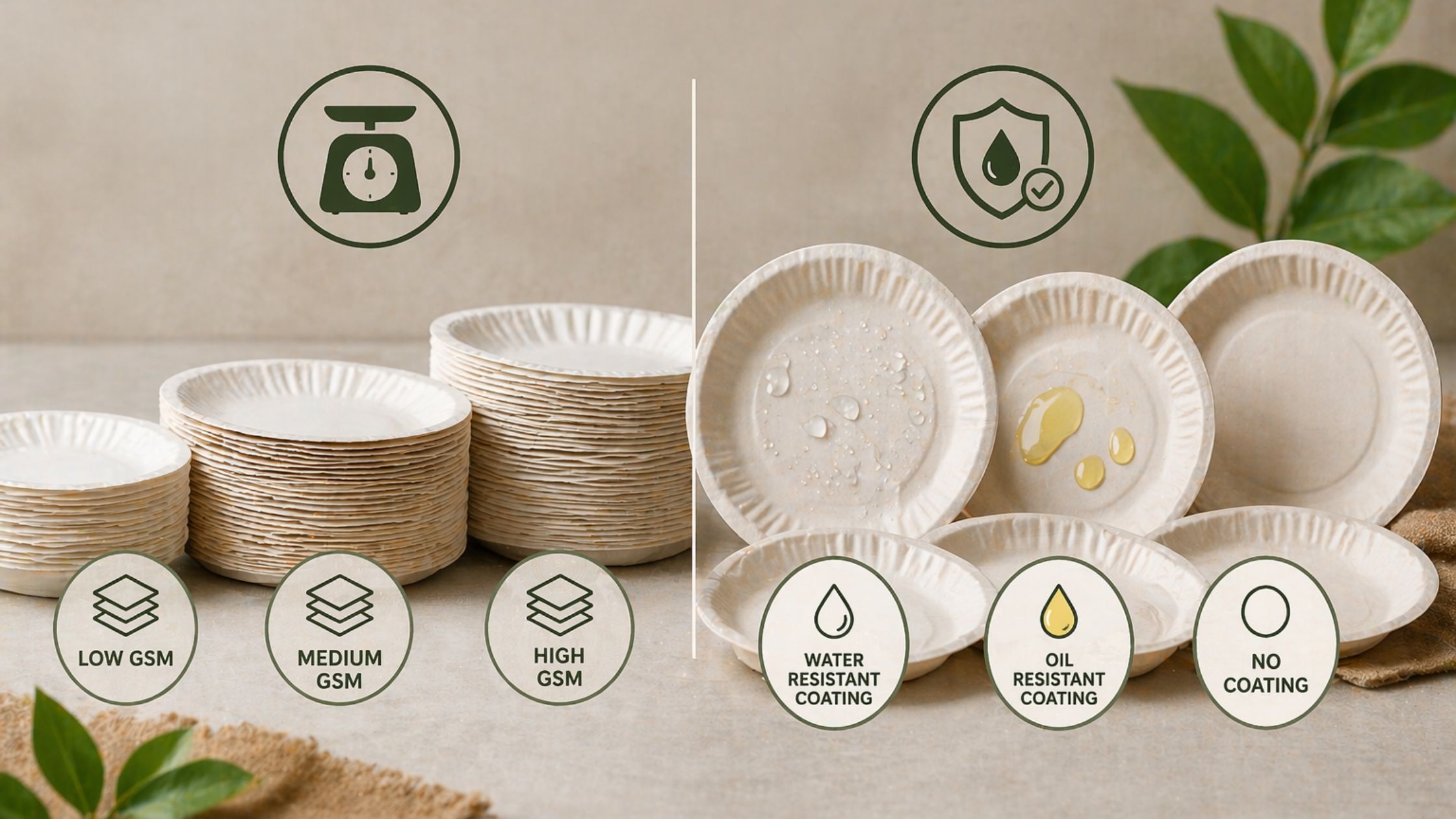
- Moisture Resistance with Coatings: Aqueous and PE-coated paper plates in the 280–350 GSM range now provide moisture and grease resistance that is functionally equivalent to most standard plastic plates for events lasting 2–3 hours.
- Microwave Safety: Paper plates with aqueous coatings are microwave-safe. The majority of plastic disposable plates are not polystyrene, and many PP plates can leach chemicals when heated, making this a clear win for coated paper in any scenario involving reheating.
- Hot Food Performance: Wax-coated plastic plates (a common budget option) can soften and deform with very hot food. Heavy-duty paper plates with aqueous coatings maintain their shape with hot soups, stews, and freshly grilled items more reliably.
- Print Quality & Aesthetics: Clay-coated paper plates accept high-resolution, colour-vivid printing that significantly outperforms the visual quality achievable on matte plastic surfaces. For branded events, themed parties, and seasonal retail, paper is the clear winner.
| Use Case | Plastic Plate | Standard Paper | Premium Paper / Bagasse |
| Dry snacks, cake, sandwiches | ✅ Overkill | ✅ Ideal | ✅ Ideal |
| Pizza, tacos, fried food | ✅ Good | ⚠️ Adequate with coating | ✅ Excellent |
| BBQ, pasta, stew, curry | ✅ Good | ❌ Not recommended | ✅ Excellent (300+ GSM) |
| Microwaving food | ❌ Not safe (most types) | ⚠️ Check label | ✅ Safe (aqueous coated) |
| Extended outdoor exposure | ✅ Superior | ❌ Risks moisture damage | ⚠️ Adequate up to 2 hrs |
| Formal / branded events | ⚠️ Limited print quality | ✅ Good | ✅ Excellent (clay coated) |
Practical Insight: For the majority of parties, events, and retail applications in 2026, heavy-duty or bagasse paper plates are now the all-around better choice. Plastic plates retain a specific advantage only in extreme-humidity outdoor settings and very-extended heavy-load situations.
Health & Safety Considerations: What’s Changed in 2026
Health considerations around disposable tableware received significant attention in 2024–2025, driven by new research into PFAS exposure, microplastic ingestion, and BPA migration from plastic food contact materials. The regulatory and scientific landscape has shifted enough to warrant an updated perspective.
Plastic Plates: The Chemical Leaching Question
The primary health concern with plastic plates in 2026 centres on two issues. First, BPA (bisphenol A) and related bisphenols used in some polycarbonate plastics have been linked to hormonal disruption — though most mainstream disposable plastic plates now use BPA-free formulations. Second, and more significantly, microplastic migration from plastic surfaces into food has been confirmed by multiple peer-reviewed studies published in 2024–2025. The health implications of chronic low-level microplastic ingestion are still being studied, but the precautionary principle is increasingly guiding both regulatory and consumer behaviour away from plastic food contact materials.
Heat accelerates chemical migration. Plastic disposable plates should never be used in microwaves or with very hot food unless explicitly tested and certified for those conditions — a standard most single-use plastic plates do not meet.
Paper Plates: The PFAS Transition in 2026
The main historical health concern with paper plates, PFAS-based grease-resistant coatings, is being actively resolved across the industry. Following FDA guidance issued in 2024 and state-level mandates in several US markets, major manufacturers have reformulated their coatings. By 2026, PFAS-free paper plates are the default in most premium and eco product lines, and retailers are increasingly require PFAS-free certification from suppliers.
Bagasse plates, which require no coating at all, are inherently PFAS-free and represent the cleanest food-contact option available in the disposable tableware category. For health-conscious consumers and retailers serving wellness or natural food audiences, bagasse is the straightforward recommendation.
PartySparkz is a wholesale party supplier that ensures all products in its eco and premium ranges carry current PFAS-free documentation. Retail buyers can request certification documentation directly from the Party Sparkz wholesale team.
How Many Types of Paper Plates Does PartySpakz supply?
- spooky Halloween paper plates
- Halloween paper plates
- birthday paper plates
- Christmas Paper Plates
- Christmas paper plates
- Independence Day Paper Plates
- 4th Of July Paper Plates
- easter paper plates
Cost Comparison: The True Price of Paper vs Plastic in 2026
Cost comparisons between paper and plastic plates are often oversimplified. Looking only at the per-unit purchase price misses several important factors that affect the true total cost — both for individual buyers and for retailers.
| Cost Dimension | Paper Plates | Plastic Plates |
| Per-unit purchase price | Slightly higher at like-for-like quality | Lower at entry-level |
| Regulatory compliance cost | Low — no restrictions on paper plates | Rising bans, levies, and labelling mandates in key markets |
| Disposal/waste management | Lower — compostable/recyclable options reduce landfill fees | Higher in markets with plastic disposal levies |
| Consumer return/complaint rate | Low with correct GSM spec | Low — but rising dissatisfaction on eco grounds |
| Brand / reputational value | High — paper aligns with sustainability values | Declining — plastic association hurts brand perception |
| Long-term viability as a retail SKU | High — growing market, regulatory tailwind | Risk — subject to regulatory restriction in multiple markets |
The upfront per-unit price advantage of plastic plates is real but shrinking, as eco-friendly paper plate manufacturing scales up and drives cost efficiencies. More importantly, the full-cost picture of regulatory compliance, disposal fees, consumer preference, and brand association increasingly favours paper. For retailers with multi-year planning horizons, the case for shifting assortment mix towards paper is compelling.
Also read – Paper Plate Qualities
The Regulatory Landscape in 2026: Why This Matters for Buyers and Retailers
Regulation is now a meaningful commercial factor in the Paper Plates vs Plastic Plates decision, not just an ethical one. The following key developments have come into effect or been announced for 2026:
- EU Single-Use Plastics Directive: Fully enforced across all EU member states. Disposable plastic plates are among the regulated items, with requirements varying by country on labelling, collection schemes, and in some cases, outright sale restrictions.
- UK Plastic Packaging Tax: Expanded in scope in 2025 to cover more single-use plastic tableware categories. Businesses using plastic plates at events or stocking them for retail face increasing cost pressures from the levy structure.
- US State-Level Restrictions: California’s SB 54 plastic reduction requirements, New York’s single-use plastic restrictions, and similar legislation in Maryland, Washington, and Colorado are collectively reshaping what US retailers can sell or need to label. More states are in active legislative review as of 2026.
- FDA PFAS Phase-Out: The US FDA’s 2024 action phasing out PFAS in food contact materials is now being implemented across the supply chain. Paper plate manufacturers selling into the US market are required to transition to PFAS-free formulations or face market access restrictions.
- Extended Producer Responsibility (EPR) Schemes: Multiple US states and European markets have introduced or are introducing EPR schemes for single-use food packaging, meaning manufacturers and importers of plastic plates face fee obligations based on the volume of plastic put onto the market.
Retailer Action Point: If you stock or are considering stocking plastic plates, audit your range against the regulatory requirements in your key markets now. The cost of non-compliance, both financial and reputational, has risen significantly in 2026.
Consumer Preferences and Market Trends in 2026
Consumer sentiment data from 2025–2026 tells a clear story: the shift away from plastic disposables is no longer a trend confined to environmentally conscious early adopters. It has moved to the mainstream.
- Sustainability as a Baseline Expectation: Multiple consumer surveys from 2025 show that the majority of shoppers in the 18–55 age bracket now consider the sustainability credentials of disposable tableware when making a purchase decision — not just price and convenience. This represents a structural shift from the 2020 baseline, where sustainability was a secondary consideration for most buyers.
- PFAS Awareness Driving Paper Plate Premiumisation: Awareness of PFAS in food contact materials has reached mainstream consumer consciousness following widespread media coverage in 2024–2025. Searches for ‘PFAS-free plates’ and ‘chemical-free disposable plates’ have grown significantly. This is driving premiumisation in the paper plate category — consumers trading up to certified PFAS-free and bagasse products.
- Event Professionals Leading the Shift: Caterers, event planners, and hospitality buyers — who collectively represent a significant portion of bulk disposable tableware consumption — have moved decisively towards premium paper and bagasse products. The combination of client sustainability expectations, venue requirements, and regulatory pressure has made plastic plates increasingly untenable for professional event use.
- E-Commerce Amplifying Eco Product Visibility: Online retail channels are disproportionately weighted towards eco-friendly tableware, with algorithm-driven discovery and review ecosystems favouring products with strong sustainability credentials. Retailers with strong eco paper plate assortments benefit from organic search and marketplace visibility advantages that plastic-heavy ranges do not capture.
Market Outlook on Paper Plates vs Plastic Plates: The global compostable tableware market is projected to grow at a CAGR of over 6% through 2030, driven by regulation, consumer preference, and continued product improvement. The single-use plastic tableware market faces flat-to-negative growth in regulated markets. For retailers, the direction of travel is unambiguous.
How to Choose Between Paper and Plastic Plates in 2026: A Practical Guide
With all the above in mind, here is a straightforward decision framework for different buyer types:
| Buyer Type / Scenario | Recommended Choice | Reasoning |
| Everyday home use | Standard paper plates | Adequate performance, biodegradable, lower environmental cost |
| Birthday / casual party | 200–250 GSM paper, themed options | Strong enough for party foods; excellent print quality for themed plates |
| BBQ / outdoor catering | 300–350 GSM paper or bagasse | Heavy-duty paper now matches plastic for most outdoor food loads |
| Extreme outdoor (beach, pool, rain risk) | Plastic or 350+ GSM paper | Only scenario where plastic retains a clear structural advantage |
| Eco-conscious / wellness events | Bagasse plates (PFAS-free) | No coatings, home-compostable, strongest sustainability credentials |
| Corporate / formal events | Ultra-grade paper 400+ GSM | Premium look and feel; aligns with corporate sustainability commitments |
| Retailers in EU / regulated US states | Paper and bagasse — transition away from plastic now | Corporate/formal events |
| Microwave use | Aqueous-coated paper only | Most plastic plates are not microwave-safe; aqueous paper is |
Source the Right Plate for 2026 with Party Sparkz
Whether you’re a retailer updating your assortment to reflect 2026’s consumer and regulatory realities, an event planner looking for a reliable bulk supply, or a buyer trying to navigate the paper vs plastic decision for a specific application, Party Sparkz has the range, the expertise, and the wholesale infrastructure to make the decision straightforward.
PartySparkz is a wholesale and retail supplier of disposable tableware and party supplies, purpose-built for retailers, event businesses, and wholesale party supplies for hotels. In 2026, PartySparkz has fully aligned its paper plate assortment with where the market is heading: PFAS-free certifications, bagasse and aqueous-coated options across every tier, and a deliberate move away from single-use plastic plates in favour of high-performance paper alternatives. Every product is labelled with GSM rating, coating type, and eco credentials, giving retail buyers the transparency they need to make confident sourcing decisions.
Party Sparkz Paper Plate Range for 2026
| Range | GSM | Coating | Eco Status | Best For |
| Everyday Party Plates | 220–250 GSM | Aqueous / PE | Recyclable (aqueous) | Grocery, mass retail |
| Heavy Duty Catering | 300–350 GSM | Aqueous (PFAS-free) | PFAS-free, recyclable | Events, catering, BBQ |
| Eco Bagasse | 300+ equiv. | None required | BPI, home-compostable | Eco stores, wellness events |
| Seasonal & Themed | 240–280 GSM | Clay + Aqueous | Recyclable | Party stores, seasonal retail |
| Ultra Premium | 400+ GSM | Aqueous / Clay | Premium sustainable | Formal events, gifting |
Why Retailers Choose Party Sparkz in 2026: Full PFAS-free documentation available on request • GSM, coating type, and eco status labelled on all trade listings • Bagasse and aqueous-coated options across every tier • Flexible MOQs for independents and chains • Regulatory-compliant range for EU and US restricted markets.
Conclusion: Paper Plates Win in 2026 With the Right Spec
The paper plates vs plastic plates debate has a clearer answer in 2026 than it has ever had before. Paper plates, particularly heavy-duty and bagasse options, have closed the performance gap with plastic to the point where the distinction is meaningful only in a narrow set of extreme use cases. Meanwhile, the environmental, regulatory, health, and consumer preference advantages of paper have grown substantially.
The practical guidance is straightforward: for everyday use, parties, catering, and most retail applications, heavy-duty or bagasse paper plates are the right choice. Reserve plastic plates only for specific extreme-outdoor scenarios, and monitor the regulatory landscape in your key markets as restrictions continue to expand.
For retailers, the strategic message is equally clear: assortments weighted towards premium paper and bagasse plates are better positioned for where consumers, regulators, and the market are heading. PartySparkz’s 2026 range is built around exactly this reality.
Frequently Asked Questions
Are paper plates better than plastic plates?
For most applications in 2026, yes. Heavy-duty paper plates (280–350 GSM with aqueous coatings) now match plastic on performance for typical party and event use, while decisively winning on environmental impact, microwave safety, and regulatory compliance. Plastic plates retain an advantage only in extreme-humidity outdoor settings and very heavy extended-load use cases.
Are plastic plates being banned?
In a growing number of markets, yes. The EU Single-Use Plastics Directive bans or restricts disposable plastic plates across EU member states. Several US states — including California, New York, and Maryland — have enacted or are implementing single-use plastic tableware restrictions. The UK Plastic Packaging Tax adds cost pressure in British markets. Buyers should monitor developments in their specific markets.
Which is more eco-friendly — paper or plastic plates?
Paper plates are significantly more eco-friendly than plastic. Bagasse plates (no coating, home-compostable, made from agricultural waste) are the most sustainable option available. Aqueous-coated paper plates are recyclable in standard paper streams. Plastic plates are non-biodegradable and effectively non-recyclable when food-contaminated.
Can paper plates replace plastic plates for hot food?
Yes, with the right specification. For hot food, including freshly grilled BBQ, pasta, stew, and soups, 280–350 GSM paper plates with aqueous or PE coatings provide reliable performance. For microwave reheating specifically, aqueous-coated paper plates labelled ‘microwave safe’ are the correct choice — and are actually safer than most plastic disposable plates, which are not recommended for microwave use.
Are paper plates PFAS-free in 2026?
Most premium and eco paper plates in 2026 are PFAS-free, following FDA action and state-level mandates that have accelerated the industry’s transition away from PFAS-based coatings. Look for explicit PFAS-free labelling or certification documentation when sourcing. Bagasse plates require no coating at all and are inherently PFAS-free.
What type of plate is best for a large outdoor party?
For most large outdoor parties where guests are eating within a normal timeframe (under 2 hours), 300–350 GSM paper plates with aqueous coating will perform reliably. For events in high-humidity or rain-risk environments, or where guests will hold loaded plates for extended periods, either ultra-heavy-duty 350+ GSM paper or a thick plastic plate remains the safer structural choice. Always spec to the heaviest, wettest item on the menu.