






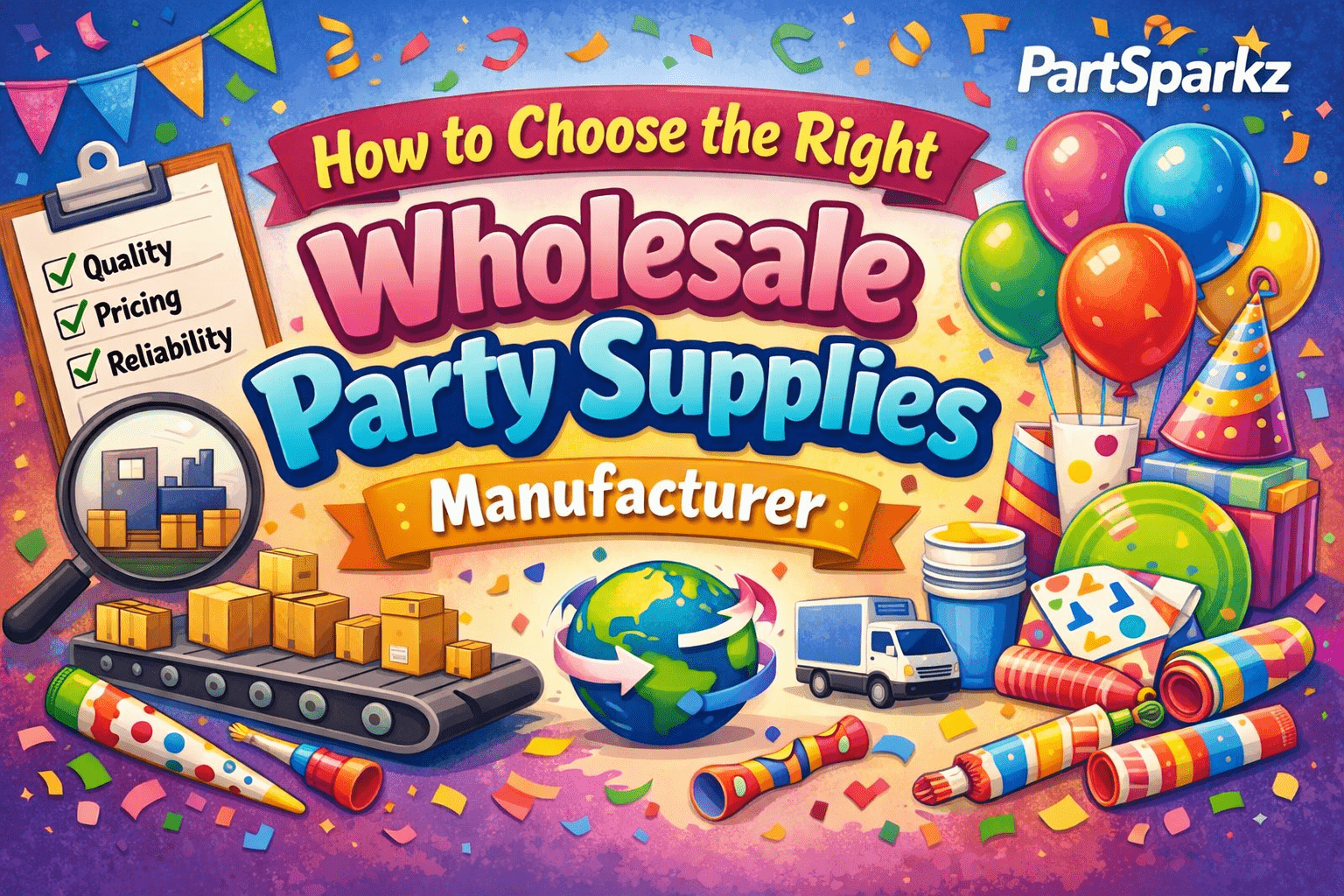
Choosing the right wholesale party supplies manufacturer requires more than comparing product catalogs or negotiating prices. Businesses sourcing party supplies in bulk must carefully evaluate product safety, production reliability, operational transparency, and logistical performance before committing to large orders.
A poor supplier decision can create serious risks, including non-compliant materials, inconsistent product quality, delayed shipments, or unexpected costs that disrupt major events and damage customer trust.
The right manufacturer, however, becomes a long-term supply partner that supports consistent product quality, reliable delivery schedules, and scalable business growth.
This guide explains how experienced buyers evaluate suppliers to ensure they choose a reliable wholesale party supplies manufacturer.
TL;DR
When selecting a wholesale party supplies manufacturer, focus on these five critical factors:
- Verify safety and regulatory compliance before evaluating pricing or aesthetics.
- Confirm the supplier is a legitimate factory, not just an intermediary.
- Test physical product samples to validate durability and functionality.
- Calculate the total landed cost, not just the unit price.
- Assess customization capabilities to support long-term brand growth.
Applying these steps helps businesses minimize sourcing risks and build stable, long-term supplier partnerships.
Why Choosing the Right Manufacturer Matters
Party supplies are used in environments where product reliability and safety are essential. Decorations, balloons, tableware, and novelty items are often produced in large volumes and distributed across retail stores, events, and online marketplaces.
Working with an unreliable supplier can lead to problems such as:
- Materials that fail safety compliance requirements
- Delayed shipments that disrupt scheduled events
- Inconsistent colors or printing between production batches
- Poor product durability that results in customer complaints
- Hidden logistics costs that reduce profitability
A structured supplier evaluation process helps prevent these issues and ensures your business works with manufacturers capable of consistent, large-scale production.
1. Verify Safety and Regulatory Compliance
Safety and compliance should always be the first step in evaluating a manufacturer.
Many party supplies are used by children or come into contact with food, making regulatory compliance essential.
For products entering the U.S. market, common regulatory standards include:
- CPSIA – Limits lead and phthalate levels in children’s products
- ASTM F963 – Safety requirements for toys and novelty items
- FDA 21 CFR – Compliance requirements for food-contact materials such as plates, cups, and napkins
Actionable Step
Always request item-specific third-party laboratory reports rather than generic compliance statements.
A valid report should clearly include:
- Product model or SKU
- Testing laboratory name
- Date of testing
- Compliance results
Manufacturers that prioritize safety will provide transparent and verifiable documentation.
2. Vet Operational Integrity
A professional website does not always indicate a legitimate manufacturing operation. Some suppliers operate as brokers or intermediaries rather than actual factories.
Verifying operational legitimacy helps buyers avoid supply chain risks.
Must read – Top 10 Party Supply Manufacturers in China
Steps to Verify a Manufacturer
Confirm the physical location– Check the listed address using mapping tools to confirm the facility exists and appears to be an industrial operation.
Request a business license -Review official documentation confirming the company is legally registered.
Review factory audits -Common audit certifications include:
- BSCI
- SMETA
- ISO 9001
These audits indicate the manufacturer follows structured production and quality management systems.
Request Recent Client References
Ask suppliers for recent customer references who have placed orders within the past 90 days.
When contacting these references, confirm:
- On-time delivery performance
- Product consistency
- Responsiveness when resolving issues
3. Evaluate Product Quality Through Samples
Never place a large order without first reviewing physical product samples.
Catalog photos and digital presentations cannot accurately demonstrate material strength, durability, or finishing quality.
Practical Sample Testing Methods
Stress testing tableware – Fill paper plates with hot food to check for warping or leakage.
Balloon durability testing – Inflate balloons to full capacity and monitor air retention over several days.
Color accuracy verification – Compare printed items against Pantone color references to ensure consistent color reproduction across batches.
Testing samples allows buyers to confirm that products meet both functional and aesthetic expectations.
4. Analyze Total Landed Cost and Minimum Order Quantities
The lowest unit price does not necessarily mean the lowest overall cost.
Experienced buyers calculate Total Landed Cost, which includes:
- Product price
- International shipping
- Import duties and taxes
- Insurance
- Customs clearance costs
- Warehousing and distribution expenses
Watch for Hidden Charges
Some suppliers may include additional costs such as:
- Handling or consolidation fees
- Documentation charges
- Seasonal demand surcharges
- Packaging upgrade costs
Clarifying these details early ensures accurate cost forecasting and margin protection.
Also read – Best Wholesale Party Suppliers in the USA
Evaluate MOQ Requirements
Minimum Order Quantities (MOQs) vary significantly between manufacturers.
High MOQs may:
- Lock up working capital
- Increase storage costs
- Limit flexibility when testing new product lines
Manufacturers that offer tiered pricing or smaller initial trial orders provide greater sourcing flexibility.
5. Assess Customization Capabilities and Product Range
Reliable manufacturers should be able to support long-term product development and brand differentiation.
Important Customization Options
Look for suppliers capable of offering:
- Custom logo printing
- Private labeling and packaging
- Custom color matching
- OEM production
- ODM design support
These capabilities allow businesses to create unique product lines and a stronger brand identity.
Evaluate Product Innovation
Manufacturers that frequently introduce new designs, seasonal collections, and updated product concepts are better positioned to help businesses remain competitive in a rapidly evolving market.
For wholesale party supplies, you must visit:
christmas decoration supplies wholesale
tablecloth manufacturer in China
Valentine’s Day party supplies
foil balloons and helium manufacturer in China
Party Balloons Supplier in China
Common Mistakes When Choosing a Manufacturer
Many businesses make avoidable sourcing mistakes when selecting suppliers.
Common errors include:
- Choosing a supplier based solely on the lowest price
- Skipping sample testing
- Ignoring safety certifications
- Failing to calculate the total landed cost
- Working with suppliers that lack clear defect or replacement policies
Avoiding these mistakes significantly reduces the risk of supply chain disruptions.
Key Questions to Ask Potential Manufacturers
| Category | Question | Ideal Response |
| Quality | Can you provide third-party material certifications? | Verifiable compliance documentation |
| Logistics | What is your guaranteed lead time and delivery reliability? | Clear production timelines with consistent delivery performance |
| Protection | Do you carry product liability insurance? | Yes, with documentation |
| Order Terms | What happens if goods arrive damaged or inconsistent? | Written replacement or refund policy |
Clear, confident responses indicate a professional manufacturing partner.
Key Takeaways
- Safety and regulatory compliance should always be verified first.
- Confirm the supplier operates as a legitimate manufacturing facility.
- Evaluate product quality through hands-on sample testing.
- Calculate the total landed cost to understand real sourcing expenses.
- Work with manufacturers that support customization and long-term growth.
A structured supplier evaluation process helps businesses establish reliable sourcing relationships and consistent product quality.
Conclusion
Choosing the right wholesale party supplies manufacturer requires careful evaluation of product safety, operational reliability, quality consistency, and cost transparency.
By verifying compliance documentation, confirming manufacturing capabilities, testing samples, and understanding total sourcing costs, businesses can confidently select suppliers capable of supporting consistent production and dependable delivery schedules.
A reliable manufacturing partner not only reduces sourcing risks but also provides the foundation for long-term growth, product innovation, and stable supply chains.
Frequently Asked Questions
Businesses typically verify manufacturers by reviewing business licenses, requesting third-party laboratory compliance reports, checking factory audit certifications, and testing product samples before placing large orders.
Sample testing allows buyers to confirm product durability, material quality, and color accuracy before committing to large production runs, reducing the risk of receiving defective or inconsistent goods.
Total landed cost refers to the complete cost of importing goods, including product price, shipping, duties, insurance, and logistics expenses.
Buyers should work with manufacturers that provide clear written policies outlining replacement, refund, or corrective actions for defective goods.