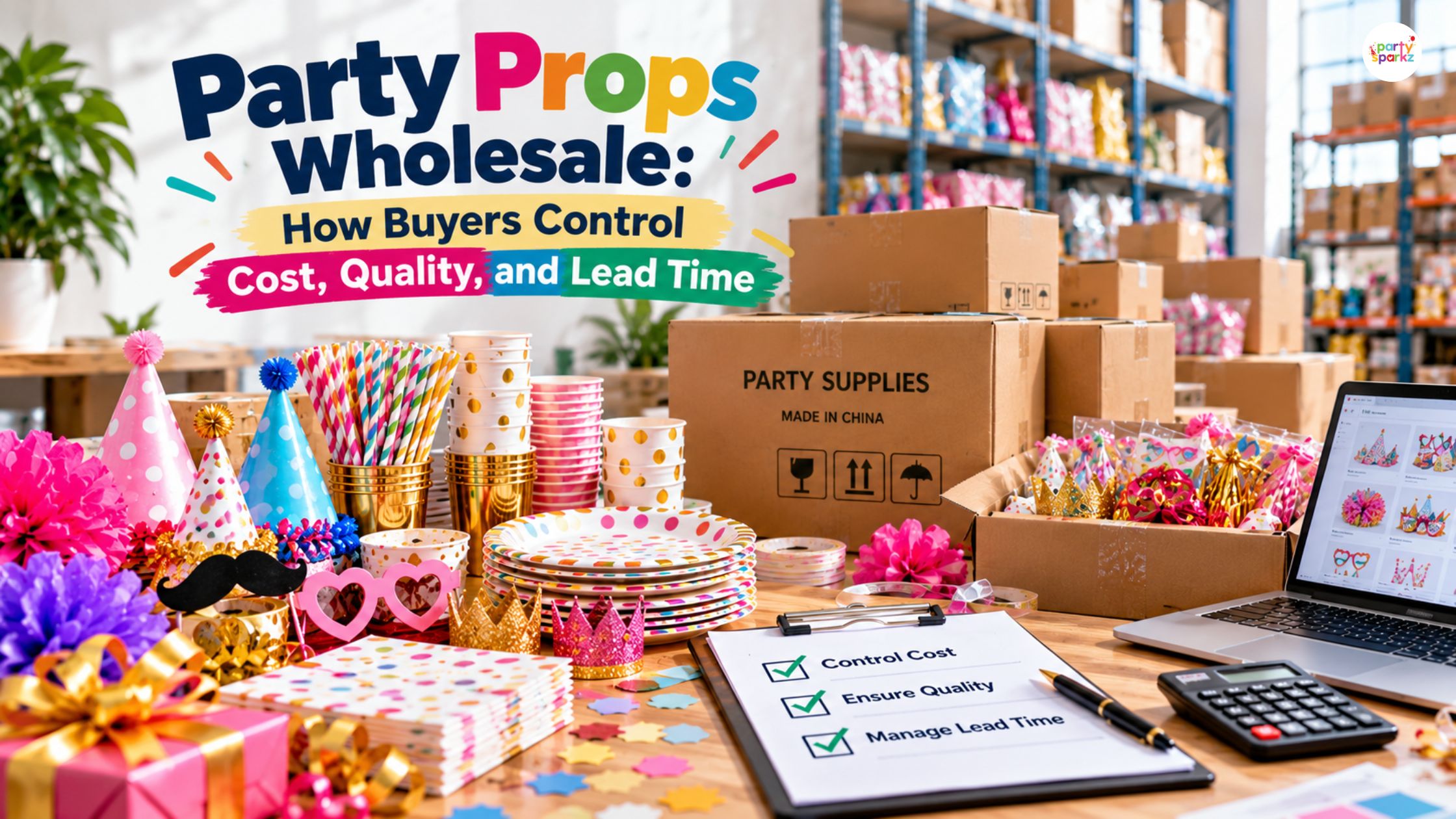
Buyers control the cost, quality and lead time of party props mostly through design decisions made before the order. These include how many new shapes a set needs, which finishes it uses, whether sticks come attached, and how it is packed. Each of those choices adds a production step, and every step adds cost, a place for defects, and days to the schedule.
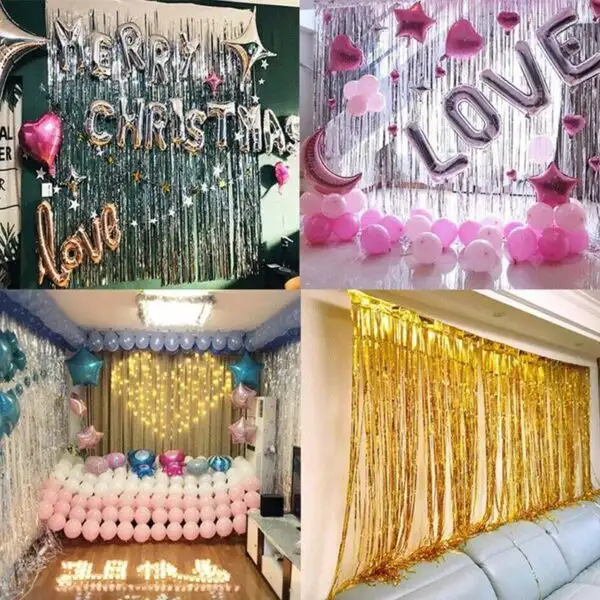
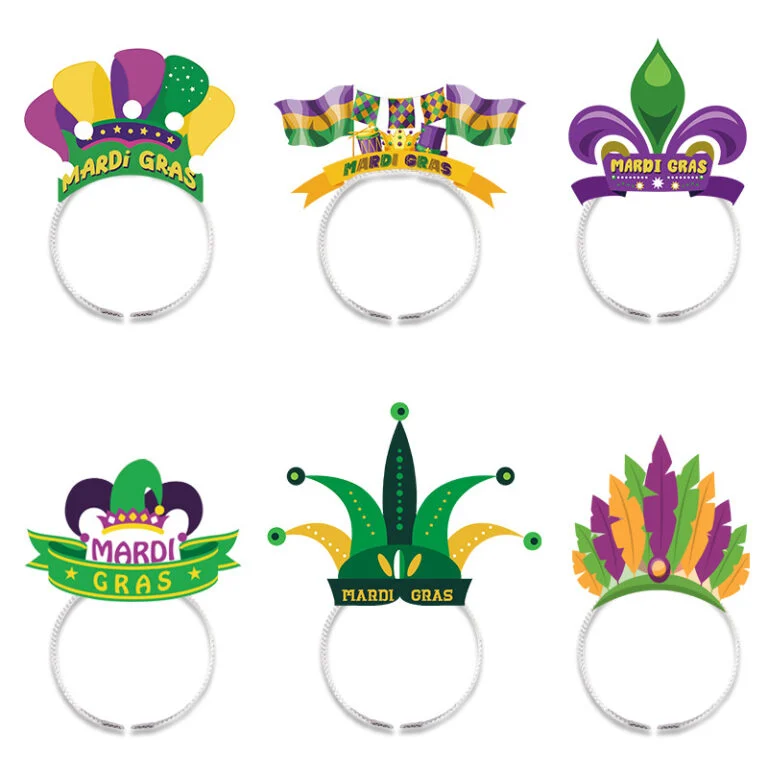
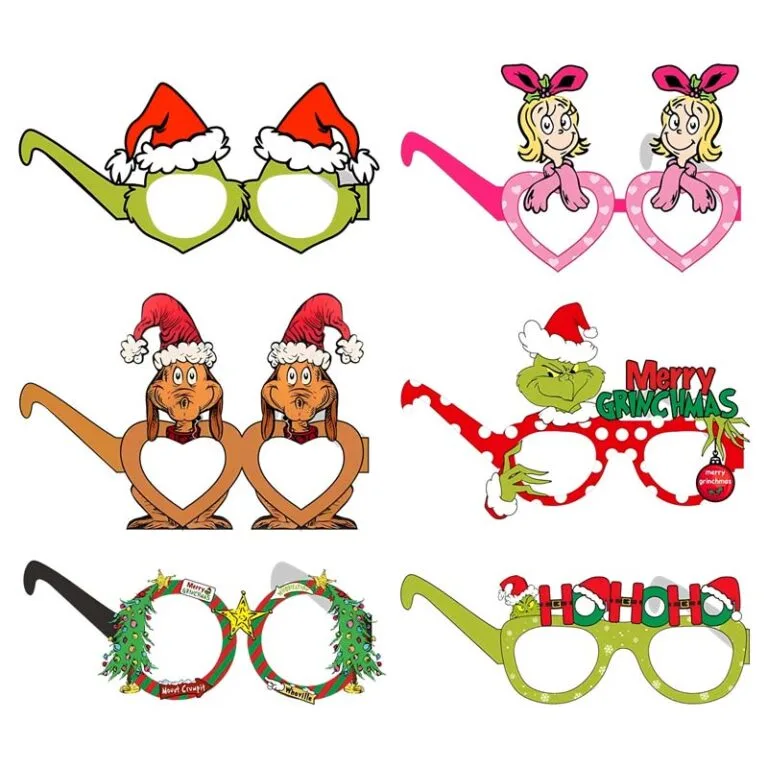
In this guide, “party props” means photo booth prop sets on sticks, backdrops such as sequin walls and foil fringe curtains, and wearables such as novelty glasses, masks, tiaras and sashes.
Key takeaways
- New die-cut shapes need a new cutting die. Reusing a factory’s existing shapes with your own artwork avoids tooling cost and time.
- Glitter, foil stamping and lamination each add a production step. Use them where they sell the product, not on every piece.
- Hand-attaching sticks adds labor, and ready-assembled sets take up more carton space. Packing sticks loose with glue dots is cheaper to make and ship.
- Text-heavy props need every word proofread. A spelling mistake on a sign prop means reprinting the whole run.
- Props sold for children are judged as children’s products. That brings sharp point and edge tests, and EN 71 in the EU.
Table of contents
- Key takeaways
- How is a photo booth prop set made?
- Where can buyers cut cost on props?
- Keep one design across the whole theme
- What goes wrong with party props?
- What safety rules apply to props?
- What makes a props order take longer?
- How to keep a props order on schedule
- What to send a supplier when asking for a props quote
- Frequently asked questions
How is a photo booth prop set made?
Knowing the steps shows where the money goes. A typical printed prop set on sticks goes through:
- Artwork and proof. Your design is laid out on the factory’s print sheet.
- Printing on card stock, usually several prop shapes per sheet.
- Finishing, such as lamination, glitter, or foil stamping, where specified.
- Die-cutting. A steel-rule die cuts every shape on the sheet in one press stroke.
- Stick attachment, by hand, if sticks come pre-attached.
- Kitting. Counting the right mix of pieces into each set.
- Packing into an OPP bag with a header card, or a printed box, then into export cartons.
Backdrops follow a different route. Sequin walls are made from sequin panels or sequin fabric, and foil fringe curtains are cut from metallized film. Wearables such as glasses and masks are printed and die-cut like props, with elastic or arms added.
Where can buyers cut cost on props?
The biggest savings come from removing steps, not from negotiating the unit price down.
| Cost lever | Cheaper choice | Costlier choice | Why it matters |
| Shapes | The factory’s existing die shapes, with your artwork | New custom shapes | A new shape needs a new cutting die, which is a one-time tooling cost and adds days |
| Sheet layout | Shapes that nest tightly on one sheet | Odd sizes that waste card | Card waste is paid for in every set |
| Finishes | Printed color only, with glitter or foil on a few hero pieces | Glitter or foil on every piece | Each finish is an extra pass through a machine |
| Sticks | Loose in the pack with glue dots | Hand-attached at the factory | Attaching sticks is manual labor, and assembled sets need bigger cartons |
| Pieces per set | The number shoppers expect at your price point | Extra pieces nobody asked for | Each piece adds card, cutting and counting time |
| Packaging | OPP bag with a printed header card | Printed window box | Boxes cost more and take more freight space |
| Text | Market-neutral wording, or text-free props | Separate US and UK spellings (“Mom” vs “Mum”) | Each language or spelling version is a separate print run with its own MOQ |
Prices are usually quoted per set or per piece, so compare suppliers on the same piece count, card weight and packaging. For how MOQs and price breaks work in general, see our guide to wholesale party supplies MOQ, pricing and lead time.
Keep one design across the whole theme
The same artwork can run on the prop set, the printed backdrop, the tableware and the balloons. A retailer can then sell the theme as a matching set, and you approve one piece of artwork instead of several.
PartySparkz sells coordinated ranges this way for occasions such as birthdays, graduation and New Year. Each range includes photo booth prop sets, sequin walls and fringe curtains alongside the tableware.
What goes wrong with party props?
Each production step has its own typical defect. Put these in your spec sheet and inspection checklist:
| Prop type | Defects to check for | How to check |
| Printed prop sets | Card too thin or warped, rough or incomplete die-cut edges, print out of register, spelling errors | Weigh the card, flex a few pieces, run a finger along cut edges, read every word |
| Glitter and foil pieces | Glitter shedding, foil flaking | Rub with a dry cloth, and shake the pack over a white sheet |
| Stick-attached props | Sticks coming loose, splinters on wooden sticks, sharp stick ends | Pull-test the joint, and check stick ends by hand |
| Sequin walls | Loose or missing sequins, panels that don’t join cleanly, uneven color between panels | Brush the surface, assemble a full wall from sample panels |
| Foil fringe curtains | Short or uneven strands, tangling, weak header tape | Hang a sample, and count strands against the spec |
| Glasses and masks | Arms cracking at the fold, weak elastic, exposed staples | Flex arms 10 times, stretch elastic, check fixings |
| Kits and sets | Missing pieces, wrong mix of designs | Count sample sets against the kit list |
The spelling row matters more for props than for most party goods. Sign props, banners and backdrops are mostly text, and the production line checks cut and count, not wording. Proofread the final print-ready file, and then proofread the physical sample.
For how to set sample sizes and pass/fail limits for the pre-shipment inspection, see our guide to quality control and shipping for party supplies from China.
What safety rules apply to props?
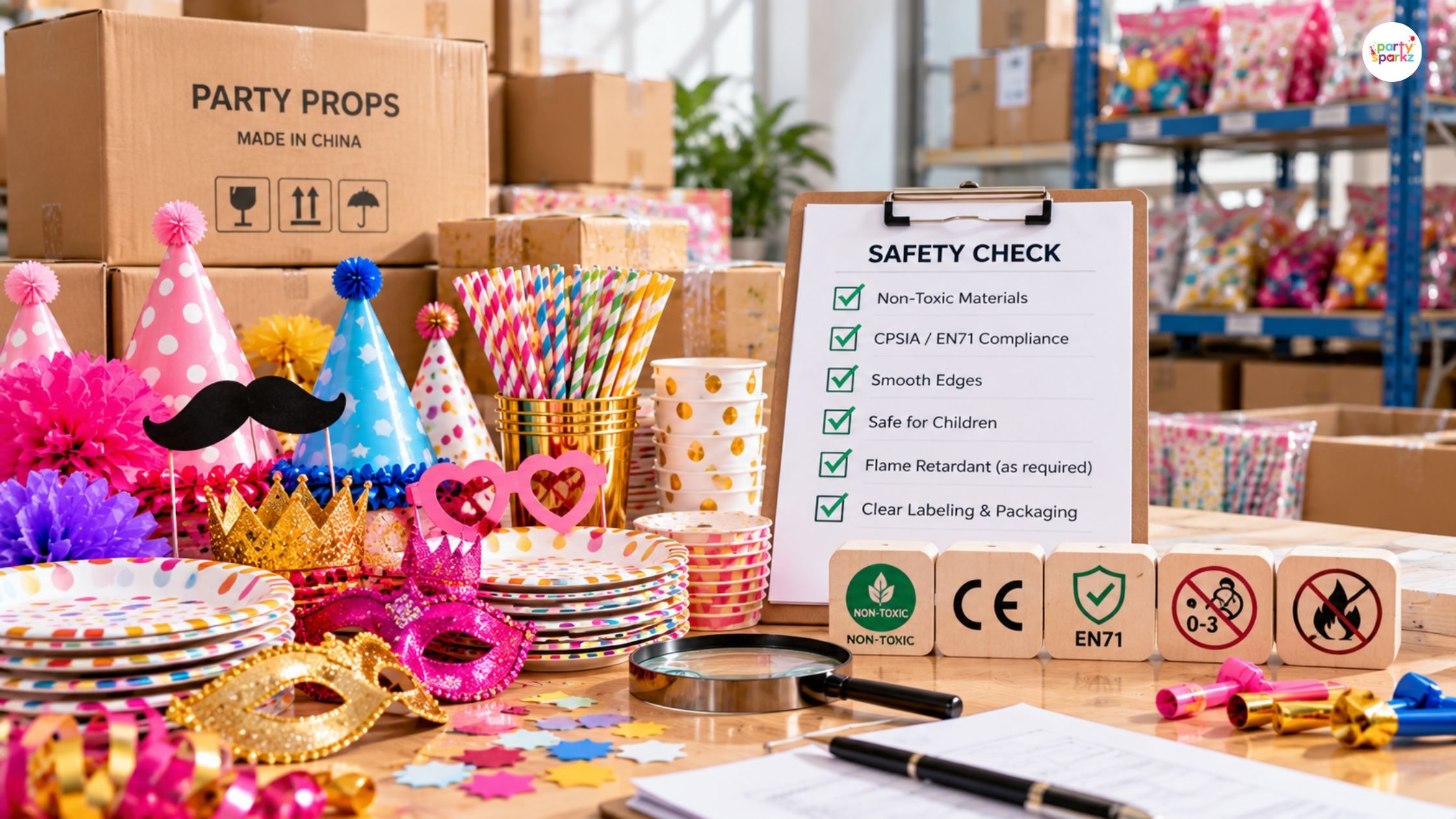
It depends on who the props are for:
- Props for children. In the US, children’s products need third-party testing and a Children’s Product Certificate. Items for children under 8 are also subject to the sharp point and sharp edge tests (16 CFR 1500.48 and 1500.49). In the EU, props for under-14s are toys, so EN 71-1 (mechanical), EN 71-2 (flammability) and EN 71-3 (chemical migration) apply.
- Masks and wearables. Stapled elastic can leave sharp points, so ask for heat-sealed or glued fixings on children’s items. Check the flammability rules for costume items in your market.
- Backdrops for venues. Hotels, venues and fire marshals often ask for flame-resistance certificates for curtains and backdrops, such as NFPA 701 in the US. If you sell to event companies, ask whether the sequin wall or fringe curtain has been tested.
See PartySparkz party glasses and party masks for current wearable designs.
What makes a props order take longer?
Lead time depends on how much of the order is new. The more steps that are new or manual, the longer it takes:
| Order type | What the factory has to do | What adds time |
| Stock design, in stock | Pick, pack, ship | Almost nothing |
| Stock design, reprint | Print, cut, kit, pack | Waiting for a slot on the press in peak season |
| Your artwork on existing shapes | Proof, sample, then a reprint | Artwork revisions and sample approval |
| New shapes or a new set | New die, proof, sample, production | Die making, and a second sample if the shapes change |
| Custom backdrop or sequin wall | Material sourcing, cutting or sewing, sample | Sourcing sequin fabric or film in your color |
Three things add days to almost any props order:
- Hand work. Sticks attached by hand and sets counted into kits are limited by labor, not machine speed. Large kitted orders take longer than their piece count suggests.
- Bought-in parts. Sticks, elastic, glue dots and sequin fabric often come from other suppliers. One late component holds up the whole order.
- Peak season. Factories fill up for graduation, Halloween, Christmas and New Year. Confirm your production slot before you finalize artwork.
How to keep a props order on schedule
- Freeze the design before the sample. Every change after sample approval restarts part of the process.
- Get a written schedule with milestone dates. Ask for sample ready, materials in, printing done, packing done and inspection date, not just a finish date.
- Approve artwork and samples within a set time. A factory can’t hold a production slot while you wait a week to reply. Agree who approves and how fast.
- Order bought-in parts early. Ask the factory to confirm when sticks, elastic, and sequin material will arrive.
- Add a buffer. Leave at least one to two weeks between the promised finish date and the last date the goods can ship.
Then work backward from the date stock must be on your shelf or at the event: shelf date, minus inland delivery, minus freight, minus production, minus sampling. Our guide to MOQ, pricing, and lead time shows this calculation with current freight times.
Also read –
What to send a supplier when asking for a props quote
A complete brief gets you comparable quotes and a realistic schedule the first time. Include:
| Item | Example |
| Product and use | 30-piece birthday photo booth prop set for retail |
| Pieces per set and mix | 10 sign props, 8 glasses, 6 hats, 6 moustaches and lips |
| Shapes | Factory stock shapes where possible; list any new shapes |
| Card weight and finish | 300 GSM card, matte lamination, gold foil on sign props only |
| Sticks | Wooden, 30 cm, loose in pack with glue dots |
| Packaging | OPP bag with printed header card, barcode on back |
| Artwork | Print-ready files with Pantone references, one market-neutral text version |
| Quantity | 3,000 sets, with a quote at 1,000 and 5,000 for comparison |
| Market and user | US retail, ages 8+; test reports required |
| Date needed | Goods ready to ship by a stated date |
The card weight, stick length and piece mix above are examples. Use the values that match your product and price point.
Planning your props order
Decide what must be new and what can be standard, then write it into the brief. Most of the savings on props come from shapes, finishes, sticks and packaging choices, and those are all settled before production starts.
To browse current props, backdrops and themed ranges, see PartySparkz wholesale party supplies. To request a quote with your brief, use the bulk order form.
Frequently asked questions
It depends on the factory and how much is custom. PartySparkz’s wholesale program starts at 500 pieces. Each new design or text version may carry its own minimum, so ask how the MOQ is counted.
Yes. Ask for a pre-production sample made from the actual card, finish and sticks you will receive, not a digital mockup. Keep one signed sample as the reference for inspection.
Usually per set for prop kits, and per piece or per panel for backdrops. Compare suppliers on the same piece count, card weight and packaging, or the prices won’t be comparable.
Yes, if the same artwork is supplied for each. Ask for the items to be checked side by side for color at inspection, because card, paper and latex take ink differently.
Foil fringe curtains are light and pack flat. Sequin walls are heavier and bulkier per square meter, so they cost more to ship. Compare freight on both before you set prices.