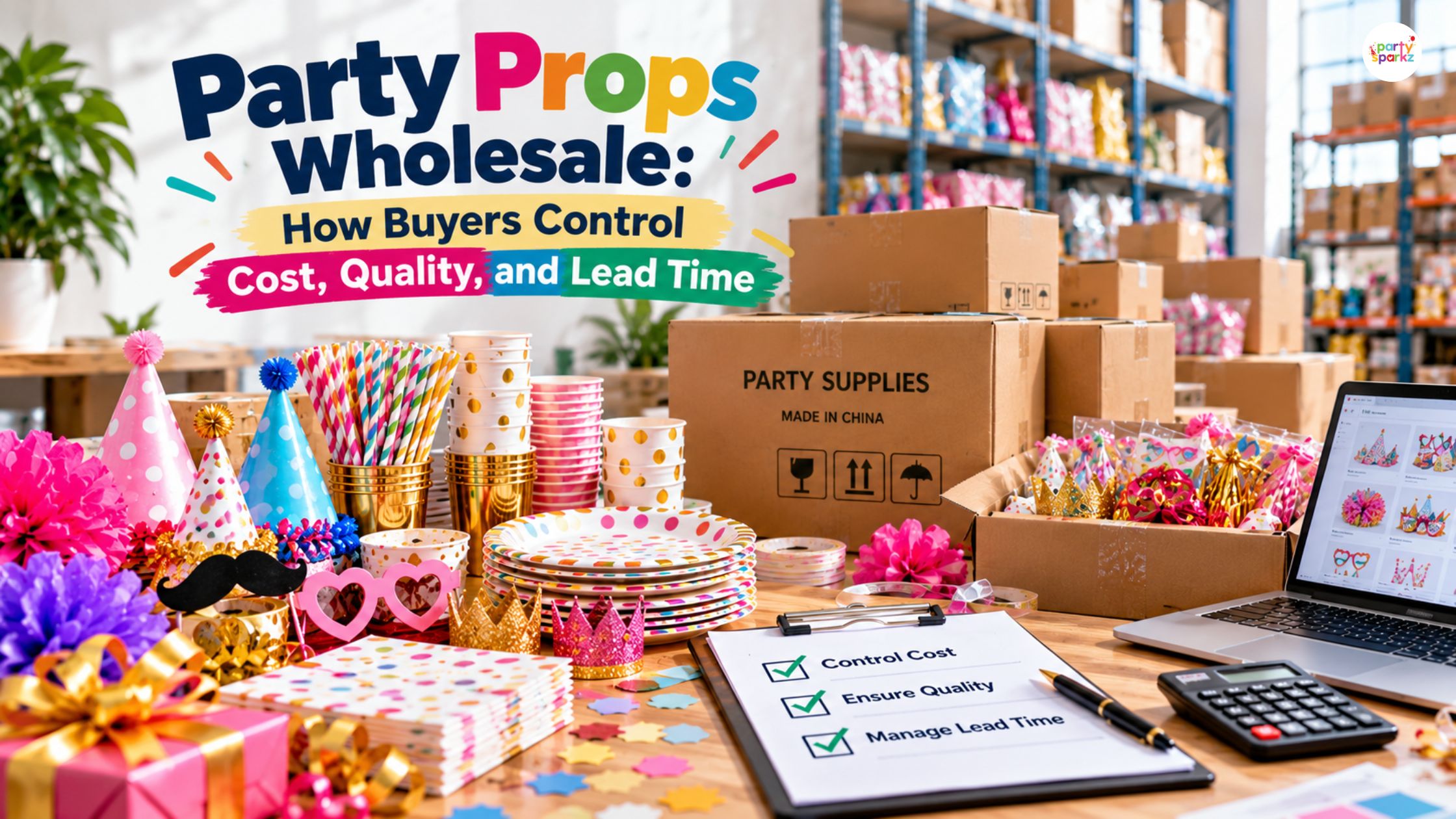

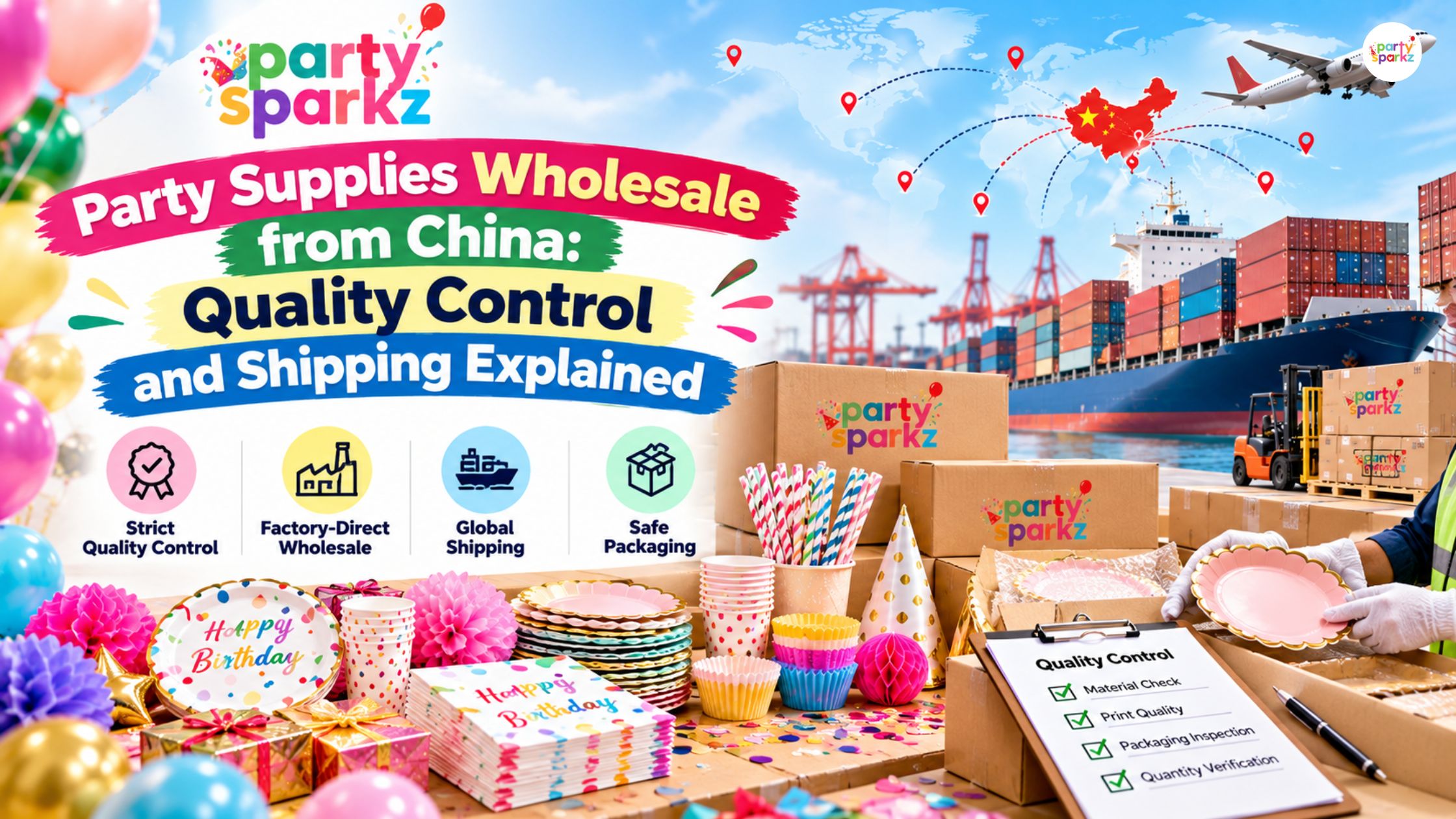
To import party supplies from China safely, approve a physical sample, and inspect the goods before you pay the balance. Then ship on terms that make clear who pays for what. Most costly problems with party goods, such as wrong colors, short counts, crushed cartons, and missing warning labels, can be caught at the factory before the container is sealed.
This guide covers the quality checks and the shipping steps for a first bulk order.
Key takeaways
- Tie your final payment to a passed pre-shipment inspection. It is the strongest quality lever you have.
- A standard inspection uses ISO 2859-1 sampling. For a lot of 3,201 to 10,000 units, the inspector checks 200.
- Latex balloons sold in the US must carry the CPSC choking hazard warning. Check the labels during inspection, not at your warehouse.
- Ocean shipments to the US need an Importer Security Filing at least 24 hours before loading in China. EU importers need an EORI number.
- For light, bulky party goods, freight, duty and fees can add a large share on top of the factory price. Work out the full landed cost before you set retail prices.
Table of contents
- When should quality be checked?
- How does AQL sampling work?
- Tie the balance payment to the inspection
- What should an inspector check on party supplies?
- Which shipping terms should you use?
- What documents do you need?
- Do you need cargo insurance?
- A worked landed-cost example
- Common party supply problems and how to prevent them
- Frequently asked questions
When should quality be checked?
At five points, from the order sheet to the container door:
- Specification sheet, before you pay a deposit. List every detail the factory will be judged on: paper weight in GSM, Pantone color references, balloon size and thickness, pieces per pack, packs per carton, carton size and strength, barcode and warning label text. What is not written down cannot be rejected later.
- Pre-production sample. Approve a physical sample made from production materials, not a digital proof. Sign and date two identical samples: one stays at the factory, and one comes to you. Both sides then check the goods against the same reference.
- Raw materials. Before printing starts, check the paper stock, latex batch or foil film against the spec. Wrong paper weight is hard to fix once 20,000 plates are printed.
- During-production inspection. An inspection at about 20–30% completion catches print registration, color drift and cutting problems while they can still be corrected.
- Pre-shipment inspection. Once production is complete and at least 80% is packed, an inspector draws random cartons and checks them against your spec and the approved sample.
How does AQL sampling work?
Most pre-shipment inspections use ISO 2859-1 (the same tables as ANSI/ASQ Z1.4) at General Inspection Level II. The lot size sets how many units the inspector checks. Your AQL (acceptance quality limit) sets how many defects are allowed before the lot fails.
A common setting for party goods is 0 critical defects, AQL 2.5 for major defects and AQL 4.0 for minor ones:
| Lot size (units) | Units inspected | Major defects (AQL 2.5): pass / fail | Minor defects (AQL 4.0): pass / fail |
| 1,201 – 3,200 | 125 | 7 or fewer / 8 or more | 10 or fewer / 11 or more |
| 3,201 – 10,000 | 200 | 10 or fewer / 11 or more | 14 or fewer / 15 or more |
| 10,001 – 35,000 | 315 | 14 or fewer / 15 or more | 21 or fewer / 22 or more |
Define the “unit” before the inspection. For party goods it is usually the selling unit, such as a sealed pack of 8 plates or a bag of 50 balloons, not each loose piece.
Agree in writing what counts as critical, major and minor for each product. A missing choking-hazard warning on a US balloon pack is critical. A torn retail header card is major. A small ink speck on a plate’s underside is minor.
Tie the balance payment to the inspection
A common structure is a 30% deposit with the order, and 70% after the pre-shipment inspection passes and before the goods are released. Agree in the contract that if the lot fails, the factory sorts or reworks it and covers the re-inspection fee before you pay the balance.
What should an inspector check on party supplies?
A generic checklist misses the defects that matter for party goods. Give the inspector a product-specific list.
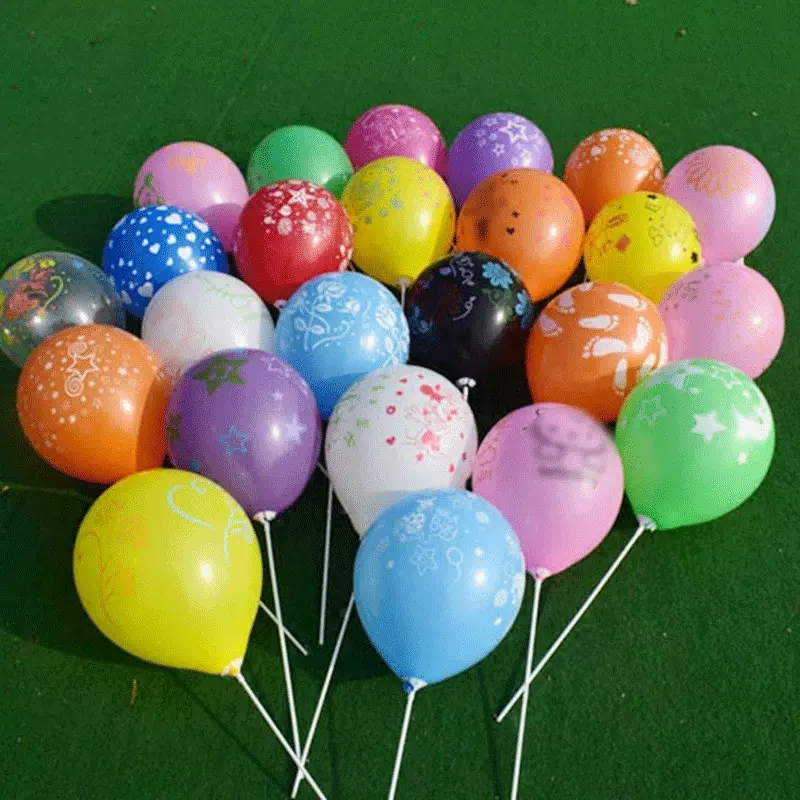
Latex balloons
- Count per bag against the label, by weighing or counting sample bags
- Size and color after inflation to the rated size, compared with the approved sample
- Burst rate on a small sample inflated to size
- Print position and clarity on printed balloons
- For the US: the choking hazard warning required under 16 CFR 1500.19 on every retail pack
- For the EU: EN 71 test reports, including EN 71-12 for N-nitrosamines
See PartySparkz latex balloons for current finishes and sizes.
Foil balloons
- Seal quality: inflate samples and leave them overnight to check for slow leaks
- Valve function and print alignment across both faces
- Folding and pack count per bag
See PartySparkz foil balloons for shapes and pack sizes.
Paper plates, cups and napkins
- Paper weight (GSM) against the spec, checked on a scale
- Leak and grease test with hot water and oil on sample plates
- Print rub-off: rub a damp white cloth over the print
- Pieces per pack and packs per carton
- Food-contact documents for your market, and plastic-free or PFAS-free statements where required
See PartySparkz party tableware for current prints.
Printed decor, banners and packaging
- Color compared with the Pantone reference under a standard daylight (D65) light box, not the factory’s ceiling lights
- Spelling on every word, especially in languages the factory staff don’t read
- Barcode scans on retail packaging
Export cartons
- Carton size and gross weight against the packing list
- Shipping marks (buyer, PO number, carton number, “Made in China”)
- A drop test on a packed carton, especially for boxed or fragile items
Crushed outer cartons turn saleable stock into seconds. Carton strength is part of product quality.
Which shipping terms should you use?

The Incoterm on your quote decides where the factory’s responsibility ends and yours begins. These are the four you will see most:
| Incoterm | Factory pays for | You pay for | Suits |
| EXW (Ex Works) | Goods ready at the factory | Everything from the factory gate, including Chinese export clearance | Rarely a good choice for first orders |
| FOB (Free On Board) | Delivery to the Chinese port and export clearance | Ocean freight, insurance, import clearance, duty, delivery | Buyers with their own freight forwarder |
| CIF (Cost, Insurance, Freight) | Everything to your destination port, with minimum insurance | Destination charges, duty, delivery | Buyers who want one price to the port |
| DDP (Delivered Duty Paid) | Everything to your door, including duty | Nothing further, beyond checking the goods | First-time importers who want one all-in price |
FOB gives you the most control over freight cost and timing. DDP is simpler, but check who is named as the importer of record. That party is legally responsible for the customs declaration.
Should you ship full container or shared container?
It depends on volume. A 20-foot container holds about 33 cubic meters (CBM), roughly 28 CBM of cartons in practice. A 40-foot high-cube holds about 76 CBM, roughly 68 CBM of cartons.
Below about 13–15 CBM, a shared LCL (less than container load) shipment is usually cheaper. Above that, compare it with a full 20-foot container. LCL adds a few days for consolidation in China and unpacking at the destination, and it involves more handling.
Party goods fill space before they reach weight limits, so ask the factory for exact carton sizes before you book freight.
What documents do you need?
The factory or its agent usually prepares:
- A commercial invoice with product descriptions, HS codes, unit prices, and Incoterms
- A packing list with carton counts, dimensions and weights
- A bill of lading for sea freight, or an air waybill for air freight
- The Chinese export declaration
- Test reports and certificates your market or customer requires
You, or your customs broker, handle the import side:
- United States. For ocean freight, the Importer Security Filing (ISF, or “10+2”) must be filed at least 24 hours before the cargo is loaded in China. Late or missing filings can draw penalties. Most importers also need a customs bond.
- EU and UK. You need an EORI number to clear goods through customs.
Do you need cargo insurance?
Yes. Under FOB, the goods are your risk once they are loaded on the ship. Cargo insurance usually costs a small fraction of the shipment value and is often written at 110% of the CIF value. Check whether the policy covers general average, which can leave every shipper on a damaged vessel paying a share of salvage costs.
A worked landed-cost example
Here are made-up round numbers for one LCL shipment of printed paper plates to the US, not quotes. Freight and duty change often, so use current figures for your own order.
| Cost line | Amount (US$) |
| 12,000 packs of printed plates at US$0.40 FOB | 4,800 |
| Ocean freight, 5 CBM LCL | 500 |
| Destination port and warehouse handling charges | 450 |
| Customs broker and ISF filing | 200 |
| Import duty (assumed 10% for this example) | 480 |
| Cargo insurance | 20 |
| Trucking to your warehouse | 350 |
| Total landed cost | 6,800 |
| Per pack | about 0.57 |
In this example, the landed cost per pack is about 42% higher than the factory price. For a detailed look at how factory prices are built up, see wholesale party supplies prices.
Plan your first order
Write the spec sheet, approve the sample, book the inspection, and choose your Incoterm before production starts. It’s cheaper to get each step right in advance than to fix it after the goods arrive.
For common questions about ordering, see the PartySparkz wholesale FAQ. To browse products, see the wholesale party supplies range. To get a quote with carton sizes and shipping options, use the bulk order form.
Common party supply problems and how to prevent them
| Problem | How to prevent it |
| A matching set arrives in two shades of the same color | Ask for plates, cups and napkins in one theme to be printed from the same ink batch, and check them side by side at inspection |
| Short counts inside packs | Include count checks in the inspection and weigh sample packs |
| Crushed cartons on arrival | Specify carton strength, and drop-test a packed carton before shipment |
| Missing warning labels or wrong barcodes | Put the exact label text and barcodes in the spec sheet, and make them a critical defect |
| Changes after the sample was approved | Put every change in writing, and approve a new sample if it affects color, material or size |
| Late shipment around holidays | Confirm production cut-off dates before National Day (1–7 October) and Chinese New Year |
Frequently asked questions
Usually the buyer, whether you hire a third-party firm or send your own staff. Inspection firms generally charge a flat fee per inspector-day plus travel, so ask several for quotes. The factory should cover re-inspection if the first inspection fails, if you agreed that in the contract.
A factory’s internal QC is a good first filter, but it is not independent. For a first order, or any order where the balance payment is large, use an inspector who works for you.
It depends on the route and the season. Flexport’s tracker put the median time from cargo ready at the factory to leaving the destination port at about 38 days for the US West Coast and 66 days for the US East Coast in August 2026. Add production time and inland delivery.
Photograph cartons before unloading, note the damage on the delivery receipt, and notify your insurer and forwarder quickly. A pre-shipment inspection report showing the goods left in good condition supports the claim.
Yes. Mixed products from one factory can share one container or LCL booking. Each product line needs its own HS code on the commercial invoice.